Many families arrive having already done tests — and been told everything looks normal. Standard blood panels are useful, but they only capture part of the picture. They tell you what's circulating in the blood. They don't tell you how well the body's cells are actually doing their job.
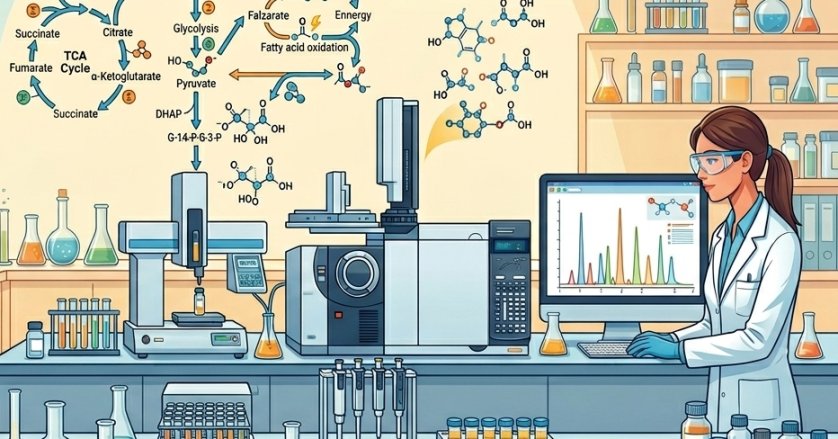
The Organic Acid Test (OAT) is a different kind of window. It's a simple urine test that measures over 70 biochemical markers — byproducts of the body's cellular metabolism — offering a view into what's happening deeper in the body: how the gut is functioning, how the nervous system is being supported, how energy is being produced, and how effectively the body is clearing toxins.
It's one of the most informative tests we use in our work with families, and for children with Autism, ADHD, or other developmental differences, it's often the most natural place to start.
Organic acids are naturally occurring compounds that the body excretes in urine as byproducts of various metabolic processes. When those processes are disrupted — due to nutrient gaps, bacterial or yeast overgrowth, or impaired detoxification — the levels of specific organic acids shift away from normal. That shift is what the test reads, and it points toward where and how the body's processes are breaking down.
Overgrowth of yeast (Candida) and bacteria, including Clostridia — which can drive behavioural and mood changes even in children without obvious digestive symptoms.
Functional levels of B vitamins (B6, B12, folate), antioxidants, and amino acids — nutrients that are critical for neurological function and frequently insufficient in these children.
How well the mitochondria — the cell's energy generators — are working. Mitochondrial dysfunction often shows up as fatigue, difficulty concentrating, and reduced overall resilience.
How effectively the body is processing and clearing toxins, and how much inflammatory burden is present. Markers like quinolinic acid — a neuro-inflammation indicator — are frequently elevated in children with Autism and ADHD.
The OAT can reveal imbalances that are entirely invisible on standard bloodwork — yet may be significantly shaping a child's behaviour, focus, digestion, and sleep.
Research consistently finds that children with Autism and ADHD have a markedly higher rate of metabolic irregularities — yeast and Clostridia overgrowth in the gut, mitochondrial dysfunction, critically low nutrient levels, and elevated oxidative stress. These factors don't operate in isolation: Clostridia overgrowth, for example, produces compounds that damage mitochondria and interfere with dopamine production, with direct downstream effects on behaviour and attention regulation.
Without a test like the OAT, these underlying causes stay hidden. Symptoms get managed, but causes don't get addressed. That's why we consider it such a valuable starting point — it gives us a concrete map of what's actually going on, so that the support we build can be targeted rather than guessed at.
One of the OAT's most practical advantages is how simple the collection process is — especially for children who find medical appointments and blood draws distressing.
Prepare. For a few days before collection, certain foods (such as grapes, apples, and fruit juices) and some supplements need to be temporarily avoided so they don't skew the results.
Collect at home. A urine sample is collected first thing in the morning, before eating or drinking. It's painless, non-invasive, and manageable even for young children.
Send to the lab. The sample is frozen and sent to a specialist laboratory, where the organic acids are measured using mass spectrometry.
Review the results. Results are typically available within two to four weeks. They require experienced interpretation — it's the overall pattern of findings that matters, not any single value in isolation.
The OAT doesn't replace standard testing — it completes it. Where blood panels show what's in circulation, the OAT shows how well the body is actually using and processing what it has.
What the results give us is direction. Not a guess at where to begin, but a clear picture of where the gaps are and how to address them. For many families, it's the first time they get concrete answers rather than another round of results that show nothing unusual.
We value your privacy
Essential cookies keep this website working. With your permission, we also use Google Analytics to measure how the site is used. You can change your choice at any time using "Cookie settings" in the footer.