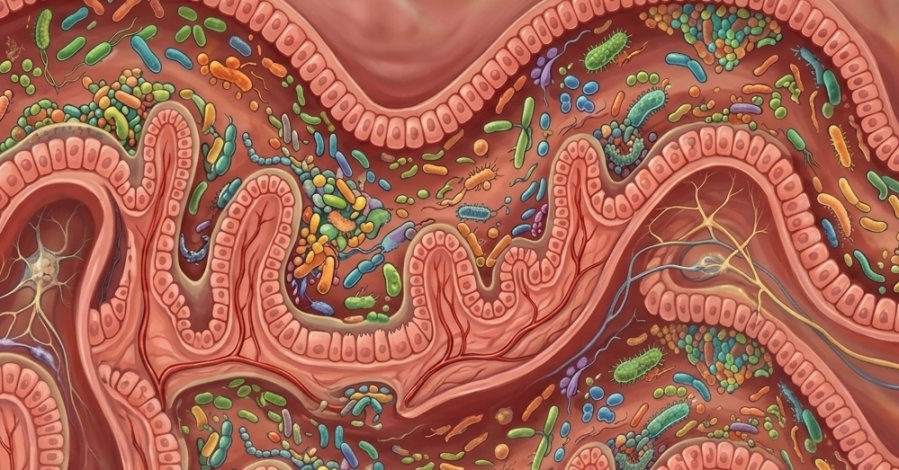
One of the moments that comes up often in our work with families is when a parent first hears that their child's digestive problems and their behaviour may be directly connected. For many, it's a surprise — we tend to think of these as separate concerns. But the science here is increasingly clear: the gut and brain are linked far more deeply than we understood even a few decades ago.
For children with Autism, this connection takes on particular importance. Understanding it can open up a new way of thinking about why your child is struggling with what they're struggling with — and where it might make sense to begin.
The gut and brain are connected by a continuous, two-way communication network known as the gut–brain axis. This network runs constantly — carrying signals about hunger and fullness, emotional state, the presence of pathogens, and levels of inflammation in the body. At the centre of it is the vagus nerve, a direct physical line between the digestive tract and the brain.
This is why stress and anxiety can cause immediate gut symptoms. And it's why an imbalanced gut can drive brain inflammation, mood instability, and difficulty focusing. The communication runs in both directions.
Around 90% of the body's serotonin — a neurotransmitter central to mood, sleep, and emotional regulation — is produced in the gut, not the brain. The gut is not just a digestive organ. It is a significant part of your child's nervous system.
The gut is home to trillions of microorganisms — bacteria, yeasts, and others — that together make up the gut microbiome. These microorganisms are not passive residents: they actively influence brain function by producing neurotransmitters and other compounds the brain depends on.
Among the key substances gut bacteria produce:
When the microbiome is out of balance — through overgrowth of harmful bacteria or yeast, or a depletion of beneficial organisms — this production becomes disrupted. And that disruption shows up in the brain: in mood shifts, impulsivity, difficulty focusing, and irritability.
Research in children with Autism has repeatedly found significant differences in gut microbiome composition compared with neurotypical peers. In one study, researchers observed higher levels of harmful bacteria in the guts of autistic children, and documented notable improvements in mood and behaviour after those bacteria were treated.
Gut imbalance in children with Autism tends to show up across multiple areas at once. The signs below are worth paying attention to, particularly when several appear together:
Digestive symptoms
Stomach pain, bloating, diarrhoea, or constipation. Research from UC Davis found that preschool-aged children with Autism are almost three times as likely to experience GI symptoms as their peers.
Mood swings & irritability
Because the gut produces key neurotransmitters, imbalance there shows up directly in emotional regulation. Gut inflammation has been linked to increased anxiety and emotional dysregulation.
Sleep difficulties
The gut microbiome plays a role in regulating the sleep–wake cycle. Children with GI problems have significantly higher rates of sleep disturbance — and poor sleep in turn disrupts gut health further.
Trouble focusing
The gut and brain are in constant dialogue. Disruption to gut health can impair cognitive function, attention, and overall mental performance — even in children without obvious digestive complaints.
Strong cravings or food aversions
Yeast overgrowth and dysbiosis can drive intense cravings for sugary or starchy foods. On the other side, gut discomfort can amplify sensory food aversions.
Eczema or skin symptoms
The state of the gut microbiome is closely tied to the immune response in the skin. Skin problems — particularly in young children — can be one of the early signals of gut imbalance.
Supporting gut health doesn't have to start with an overhaul. The most important areas to focus on:
Gut health is one of the areas we regularly explore with families in our work — whether through testing like the Organic Acid Test or a stool test, or through targeted dietary and supplement support. Sometimes what families have been experiencing as a behavioural or neurological challenge turns out to have a significant gut component. And when that's addressed, things that seemed stuck begin to shift.
We value your privacy
Essential cookies keep this website working. With your permission, we also use Google Analytics to measure how the site is used. You can change your choice at any time using "Cookie settings" in the footer.